01Frame
Define the decision
Name the user, workflow, outcome, constraint, and evidence that would justify the work.
Our method keeps business judgment, product design, data, and engineering connected. Each stage produces a useful decision or a working part of the system.
The depth changes by engagement; the order of the questions does not.
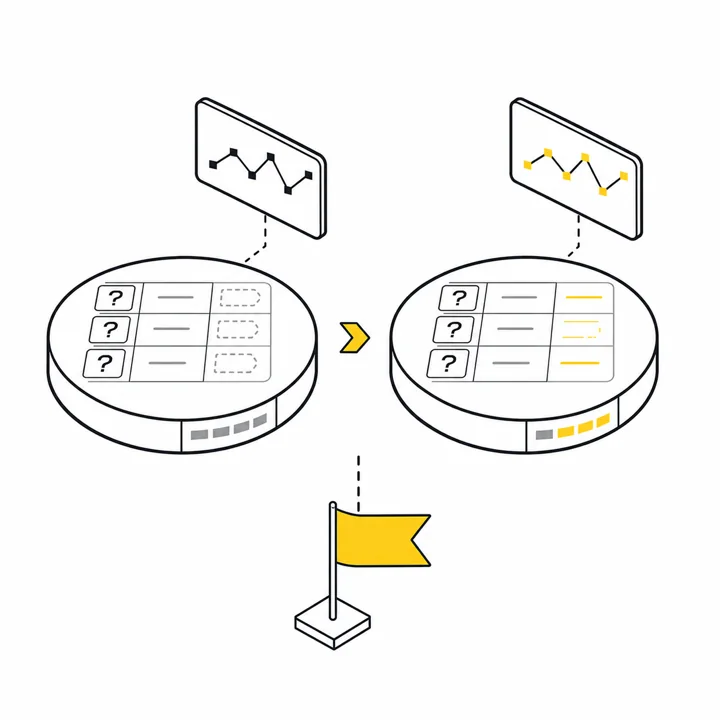
Name the user, workflow, outcome, constraint, and evidence that would justify the work.
Review the product, data, architecture, operating context, and dependencies already in place.
Use a focused prototype or technical spike to find out what the larger plan depends on.
Design, engineer, integrate, validate, and release the smallest complete version that can create value.
Document the system, decisions, controls, and next priorities for the team operating it.
Engagement shapes
Frame, inspect, and prove enough to choose the right investment and delivery sequence.
Ends with explicit findings, tradeoffs, and an ordered plan.
Carry the agreed direction through design, engineering, integration, validation, and handoff.
Ends with an operational system and documented ownership.
Stay connected to the roadmap, operating signals, and changing business context after launch.
Ends only when continuing ownership no longer creates useful leverage.
Start with the constraint
We will help you define the first decision, the right engagement shape, and the smallest useful scope.
FAQ
They follow the same logic, but not the same duration or depth. A focused audit may stop after proving the main assumption; a delivery continues through production and handoff.
Yes. Ownership can be divided by workstream as long as the interfaces, decisions, review points, and acceptance conditions remain explicit.
That is useful. The purpose of the early stage is to change or stop a weak plan before the expensive part of delivery begins.